

Laser Printer vs Inkjet Printer: A Strategic Guide to Maximizing Your Industrial Marking Advantages
In the relentless ecosystem of modern manufacturing, where margins are meticulously calculated and brand reputation is paramount, the technology you choose for product coding and marking is far more than a line item, it is a pivotal strategic asset.
This decision, fundamentally rooted in the Laser Printer vs Inkjet Printer debate, influences not only your bottom line but also your operational flexibility, product quality, and compliance posture. For forward-thinking businesses collaborating with a solutions provider like Anasia industrial solutions, the goal is to move beyond mere functionality and unlock a suite of advantages that deliver a tangible competitive edge in the ongoing Laser Printer vs Inkjet Printer comparison.
The debate between industrial laser and inkjet systems is often mistakenly reduced to a simple cost comparison. However, a more insightful approach is to view them as two powerful toolkits, each filled with unique strengths designed to solve specific production challenges. By thoroughly understanding the distinct perks inherent in the Laser Printer vs Inkjet Printer dynamic, you can align your investment with your long-term operational ambitions, ensuring that your production line is not just equipped, but optimized for excellence.
This guide is dedicated to exploring the profound advantages of both industrial laser marking and Thermal Inkjet (TIJ) systems. Our focus is not on which technology is universally “better,” but on providing a clear, advantage-focused framework for the Laser Printer vs Inkjet Printer decision, demonstrating how each can be leveraged to drive efficiency, enhance quality, and future-proof your operations.
The Transformative Power of Industrial Laser Marking
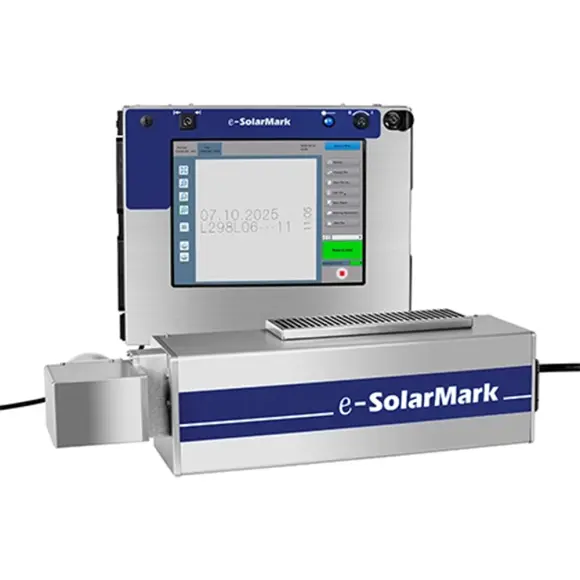
Industrial laser marking systems represent the pinnacle of precision, durability, and operational efficiency. They are an investment in long-term stability and are characterized by a set of advantages that become increasingly valuable over time and at scale, making them a dominant force in the high-volume segment of the Laser Printer vs Inkjet Printer discussion.
1. Unparalleled Mark Permanence and Superior Quality
The most significant advantage of laser marking is the exceptional durability and quality of the mark itself. Unlike printing on a surface, a laser system alters the surface itself. This fundamental difference is a key differentiator in the Laser Printer vs Inkjet Printer analysis. Through sophisticated processes such as annealing, etching, foaming, and carbonizing, the mark is deeply integrated into the substrate. This deep integration makes the mark inherently resistant to abrasion, heat, solvents, and UV exposure. For industries like aerospace, medical devices, and automotive, where a code must last the lifetime of the product, this permanence is not an advantage—it is a non-negotiable requirement that heavily sways the Laser Printer vs Inkjet Printer decision in favor of laser.
2. Exceptional Operational Economy and a Minimalist Supply Chain
While the initial capital outlay for a laser system can be higher, its long-term operational economy is a game-changer in the Laser Printer vs Inkjet Printer cost-of-ownership model. The core of this advantage lies in the radical simplification of consumables. A laser marker operates without ink, toner, solvents, or ribbons. The primary consumable is electricity. This eliminates the recurring expense of purchasing and managing these materials, a core pain point in the Laser Printer vs Inkjet Printer debate. In high-volume production environments, the cost-per-mark with a laser system can be a fraction of a cent, creating a compelling ROI story where the system pays for itself over time.
3. Unmatched Uptime and “Set-and-Forget” Reliability
In manufacturing, downtime is the enemy of profitability. Laser systems are engineered to be a bastion of reliability on the production floor, a critical factor in the Laser Printer vs Inkjet Printer evaluation. With no printheads to clog, no ink to dry out, and no complex fluid delivery systems to purge, laser markers require very little daily intervention. This reliability translates directly to increased throughput and capacity. Production managers can have confidence that the laser system will perform consistently, shift after shift, without unexpected stoppages. This “set-and-forget” characteristic is a paramount advantage in the Laser Printer vs Inkjet Printer conversation for 24/7 operations.
4. Unrivaled Material Versatility and Application Flexibility
A single laser system can be an incredibly versatile workhorse, capable of adapting to a wide range of materials and products. This versatility is a powerful argument in the Laser Printer vs Inkjet Printer discussion for manufacturers with diverse product lines. A properly specified laser can mark on metals, plastics, glass, ceramics, and silicone. This can consolidate multiple marking processes into a single, centralized system, simplifying the entire Laser Printer vs Inkjet Printer infrastructure decision. Furthermore, the non-contact process is ideal for marking delicate or finished goods where physical contact from a printhead could cause damage.
The Precision and Agility of Industrial Thermal Inkjet (TIJ) Printing

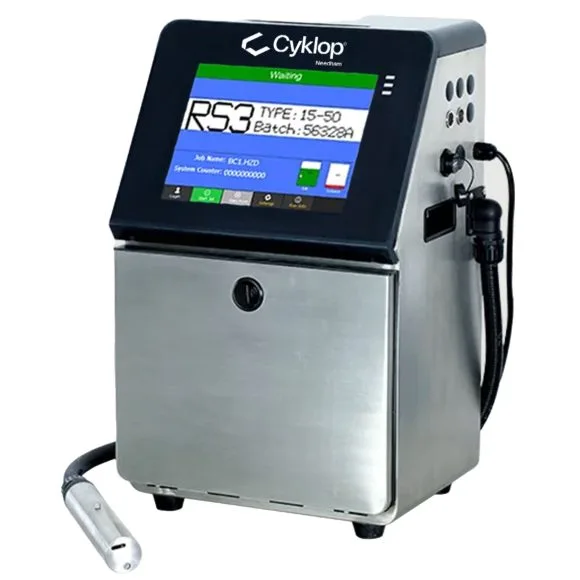
Thermal Inkjet technology offers a different but equally powerful set of advantages, centered on exceptional print quality, operational agility, and a gentle touch for sensitive applications. These strengths define its crucial place in the broader Laser Printer vs Inkjet Printer landscape.
1. Unrivaled High-Resolution Print Quality
When it comes to the sheer sharpness and detail of a mark, TIJ systems are often unmatched in the non-laser domain. This is a key differentiator in the Laser Printer vs Inkjet Printer quality comparison. TIJ technology can produce extremely high-resolution marks (often exceeding 600 dpi), resulting in exceptionally legible text, flawless scannable barcodes, and the ability to print intricate logos and graphics directly onto products.
This is crucial for industries like cosmetics, luxury goods, or pharmaceuticals, where brand aesthetics and legibility are paramount. The precision of TIJ ink droplets produces barcodes with excellent edge definition, which consistently achieve high scores in verifiers, reducing supply chain risks and presenting a strong case in the Laser Printer vs Inkjet Printer debate for applications where supreme clarity is needed.
2. Lower Barrier to Entry and Rapid ROI for Specific Applications
The financial case for TIJ is often built on accessibility and speed of deployment, a vital consideration for many businesses weighing the Laser Printer vs Inkjet Printer option. The upfront cost of a TIJ system is generally lower than that of a comparable laser system. This makes it an economically attractive option for small to medium-sized enterprises, pilot production lines, or applications where the full volume potential does not justify a larger capital expenditure. For businesses with lower to medium volume requirements, this lower initial cost allows for a very rapid return on investment, a decisive factor in the Laser Printer vs Inkjet Printer financial analysis.
3. Exceptional Versatility on Primary Packaging and Sensitive Materials
TIJ systems excel in the complex world of primary packaging, where the substrate is often the final product container. This expertise defines a critical niche in the Laser Printer vs Inkjet Printer selection process. The inkjet process is inherently low-impact, making it ideal for marking on flexible, thin-walled, or sensitive materials where laser ablation could potentially puncture, warp, or otherwise compromise the packaging integrity.
This includes materials like flexible film pouches, labels, and corrugated cardboard. A key strength of TIJ in the Laser Printer vs Inkjet Printer matchup is the wide availability of specialized inks, including pigment-based, dye-based, and even color inks, for security and branding applications that lasers cannot replicate.
4. Operational Agility and Simplified Changeovers
In dynamic production environments with frequent line changeovers, the agility of a TIJ system is a significant advantage in the Laser Printer vs Inkjet Printer operational flexibility comparison. Many TIJ printers are compact and easily mounted on moving lines or integrated into existing machinery with minimal engineering. Their portability allows them to be deployed across different lines as needed. Furthermore, changing a date, batch code, or product logo is as simple as updating a digital file. This enables quick transitions between product runs, supports mass customization, and allows for last-minute changes without any physical tooling or downtime, offering a level of agility that is a hallmark of the inkjet side of the Laser Printer vs Inkjet Printer discussion.
Strategic Synergy: Leveraging the Right Advantages with Anasia Industrial Solutions.
The most successful manufacturing operations are those that strategically deploy technology based on specific needs. There is no one-size-fits-all answer in the Laser Printer vs Inkjet Printer deliberation. The true power lies in understanding which set of advantages aligns with your core operational drivers. The ultimate resolution to the Laser Printer vs Inkjet Printer question is not about finding a winner, but about finding the right tool for your unique environment.
Choose Laser Marking to Leverage:
- Total Cost of Ownership: For maximum long-term savings in high-volume scenarios.
- Absolute Permanence: When the mark must survive harsh environments.
- Maximum Uptime: For 24/7 operations where reliability is critical.
- Material Diversity: When a single system needs to mark on a wide variety of substrates.
Choose Thermal Inkjet (TIJ) to Leverage:
– Supreme Print Quality: For the highest resolution text, graphics, and barcodes.
– Financial Accessibility: When a lower initial investment is key.
– Primary Packaging Expertise: For gentle, high-quality coding on sensitive materials.
– Production Agility: In environments requiring frequent changeovers.
At Anasia Industrial Solutions, we specialize in moving beyond the theoretical to provide a practical, data-driven roadmap for the Laser Printer vs Inkjet Printer decision. Our process involves a deep dive into your production environment to determine the perfect fit. We don’t just provide a machine; we provide a solution engineered to unlock the specific advantages that will drive your productivity, finally putting the Laser Printer vs Inkjet Printer debate to rest for your business.
Comments are closed