


How to Detect Metal Contaminants in Food Industry: A Technical Guide Using Safeline Metal Detection Systems
Food safety management systems operate on one simple principle: it is necessary to understand how to detect metal contaminants in the food industry to prevent contamination, detect it, and control it in order not to let it reach the end consumer. Some of the most common hazards that food producers face on a day-to-day basis relate to the presence of metals. It is a crucial concern to understand how the presence of these contaminants needs to be identified in the food industry.
Today, food processing plants use sophisticated inspection technologies to mitigate this risk. There are few technologies as mature and proven in terms of capability as industrial metal detectors, especially solutions from the Safeline product line at METTLER TOLEDO.
Anasia Industrial Solutions supports food manufacturers in implementing Safeline metal detection technologies according to production-specific and regulatory requirements.
Why Metal Contamination Remains a High-Risk Issue
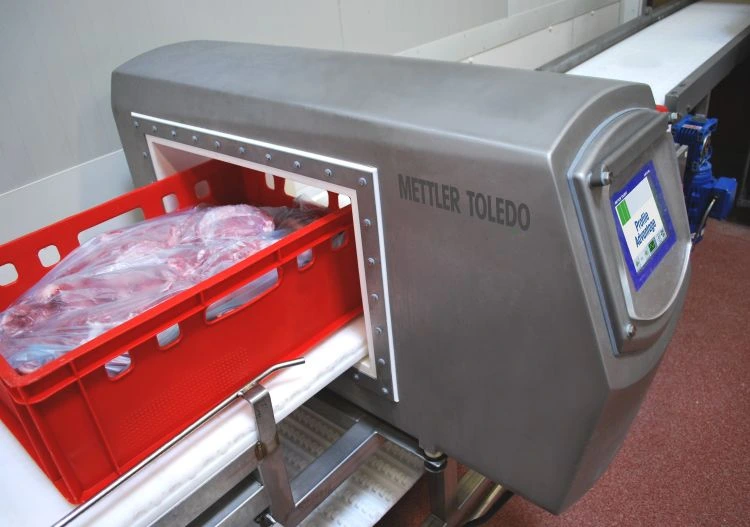
Metal contaminants typically originate from equipment wear, broken tooling, fasteners, or upstream raw material handling. Even in highly automated plants, vibration, friction, and maintenance activities introduce ongoing risk. This is why knowing how to detect metal contaminants in food industry processes requires more than visual inspection or random sampling.
Regulatory bodies and global food safety initiatives require manufacturers to demonstrate control over physical contaminants. Failure to do so can result in product recalls, legal exposure, and loss of market access. As production speeds increase and product margins tighten, reliance on manual detection methods becomes both impractical and ineffective.
The Science Behind Industrial Metal Detection
For better comprehension of food industry application-based metal contaminant detection, one needs to know the mechanism involved in this process.
Industrial metal detectors work on the principle of a balanced electromagnetic field created by a transmitter coil and measured by a series of receiver coils. When the food item goes through the aperture, it creates a stabilized electromagnetic field. The presence of metal, whether it is ferrous metals, non-ferrous metals, or stainless steel, interferes with this electromagnetic field, sending out a signal above a predetermined level.
Safeline systems from METTLER TOLEDO are engineered to detect even small metal particles while minimizing false rejects caused by product effect, moisture, salt content, or temperature variation.
Types of Metal Detection Systems in Food Production
Different production environments require different detector configurations. Choosing the right system is a critical part of determining how to detect metal contaminants in food industry processes effectively.
Conveyor-Based Metal Detectors
Used for packaged or unpackaged products moving on a belt, these systems provide inline inspection with automatic rejection mechanisms. They are widely used in bakery, ready-meal, and frozen food applications.
Gravity-Fall Metal Detectors
Designed for powders, grains, and free-flowing products, gravity systems inspect material as it falls through a vertical tube. This approach ensures high sensitivity without interrupting product flow.
Pipeline Metal Detectors
For pumped products such as sauces, dairy, or meat slurry, pipeline detectors inspect the product within hygienic stainless-steel piping. These systems are critical in understanding how to detect metal contaminants in food industry liquid and semi-liquid processes.
VFFS and Throat Detectors
Installed directly on vertical form-fill-seal machines, these detectors inspect products immediately before packaging, reducing the risk of contaminating sealed goods.
Anasia Industrial Solutions assists manufacturers in selecting the most suitable Safeline metal detection configuration based on product type, line layout, and risk profile.
Detection Performance and Sensitivity Considerations
Metal detection sensitivity is not a fixed value. It depends on product characteristics, aperture size, line speed, and environmental stability. One of the most challenging aspects of how to detect metal contaminants in food industry environments is managing product effect—false signals caused by moisture, salt, or temperature.
Safeline metal detection systems are designed with advanced digital signal processing and automated calibration routines. These features allow manufacturers to maintain consistent detection performance even as production conditions change.
Compliance, Auditability, and Data Integrity
Food manufacturers must demonstrate not only that detection systems are installed, but that they are verified, validated, and monitored. This is a critical dimension of how to detect metal contaminants in food industry operations at scale.
Safeline systems support:
– Automated test routines
– Secure audit trails
– User access control
– Data logging for quality and compliance reporting
These capabilities simplify compliance with GFSI-recognized standards, retailer codes of practice, and internal quality programs.
Through proper installation and validation, Anasia Industrial Solutions helps ensure that Safeline metal detection systems meet audit and compliance expectations.
Integration into Food Safety Management Systems

Metal detection should not be treated as a standalone device. Effective implementation of how to detect metal contaminants in food industry operations requires integration with HACCP and preventive control programs.
This includes:
– Identifying critical control points (CCPs)
– Establishing rejection and quarantine procedures
– Training operators and quality teams
– Periodic performance verification
Safeline systems are designed to integrate seamlessly into automated production lines while supporting structured quality workflows.
Why Safeline by METTLER TOLEDO Is a Reference Standard
Safeline metal detection solutions benefit from decades of application expertise across food, pharmaceutical, and packaging industries. Their designs emphasize hygienic construction, repeatable performance, and long-term stability.
For manufacturers evaluating how to detect metal contaminants in food industry environments with high throughput and strict compliance demands, Safeline systems offer a balance between sensitivity, reliability, and operational efficiency.
Long-Term Operational Value
In addition to ensuring food safety, successful metal detection minimizes downtime, reduces lost products, and safeguards reputation. Well-maintained and robust, environmentally stable systems have value over the life of the equipment.
A lesson in comprehending the principles for detecting metal contaminants in the production line in the food industry is therefore not only imperative for safety reasons, but it is an investment in the business.
Conclusion
Metal contamination remains one of the most serious physical hazards in food manufacturing. Successfully managing this risk requires a combination of technology, process discipline, and system integration. Knowing how to detect metal contaminants in food industry environments means selecting detection solutions that are sensitive, stable, and aligned with real production conditions.
Safeline metal detection systems from METTLER TOLEDO provide a technically proven foundation for contamination control across a wide range of food applications. When properly specified and integrated, they enable manufacturers to meet safety expectations, regulatory requirements, and customer trust, consistently and reliably. Collaborating with experienced solution providers such as Anasia Industrial Solutions ensures correct system selection, integration, and long term support for Safeline metal detection technologies within food production environments.
Comments are closed